Articles by Mark

Contributing writer at HireTalent LAT
Contributing writer at HireTalent LAT
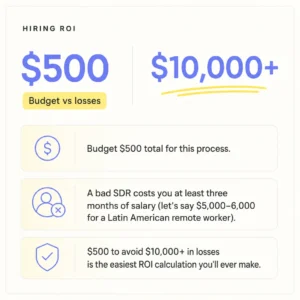
A bad SDR hire costs $10,000 or more. Here is how a $100 paid trial task reveals everything a resume and interview never will about a Latin American candidate.
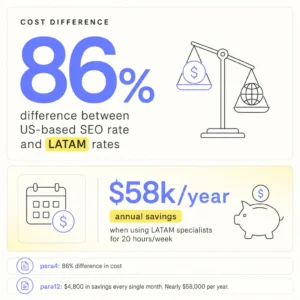
Someone in Medellín was doing the same SEO work as a San Francisco specialist for $18 an hour versus $125. Here is why that gap exists and how to hire across it properly.
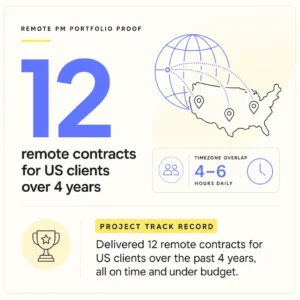
Hiring managers spend 90 seconds on your materials before deciding. Here is what LATAM project managers need in their portfolio to land remote contract roles.

Skilled remote medical admins from Colombia and Argentina cost half what US staff do. Here’s how practices are pulling this off while staying HIPAA compliant.

Todo apps and Netflix clones won’t get you hired remotely. Here’s what to put in your Python portfolio to land real contracts and serious offers in 2026.
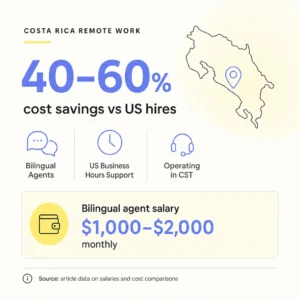
Your customers email at 2 PM and hear back at 2 AM. Here is why bilingual support agents in Costa Rica fix the time zone and cost problem at the same time.
US companies are pulling workers back to offices while hiring HR Generalists from Latin America at 40 to 60 percent less. Here is what that market looks like.
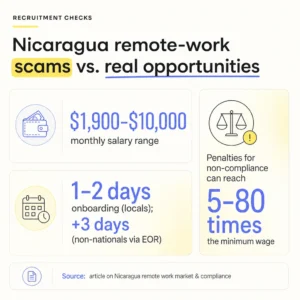
Nicaragua has great remote talent and agencies that should not exist. Here is how to verify registration, check reputation, and demand proper documentation.
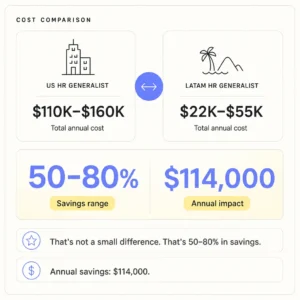
US companies pay $15,000 a month for an HR Generalist. Latin American remote professionals do the same work for $1,500 to $4,000. Here is the full breakdown.

Getting a WhatsApp message about a $25/hour job you never applied for? Here is how to tell if a call center job posting in LATAM is real or a scam.