
A pediatrician in Texas posted on an online thread last year. She’d replaced two front desk staff with one remote worker from Mexico.
Cost dropped from $6,000 monthly to $2,400.
But here’s what caught my attention: her patient satisfaction scores went up.
Why? The remote worker was bilingual. Half her patients were Spanish-speaking families who’d been struggling with the English-only front desk for years.
This is playing out everywhere.
Dental practices in Australia. Small clinics in the UK. Hospice care in rural America.
The pattern is clear hire a medical administrator from Latin America, pay them a legitimate professional wage (not poverty wages), and watch your practice actually improve.
The Money Part (Because That’s What You’re Wondering)
Let’s just put the numbers on the table.
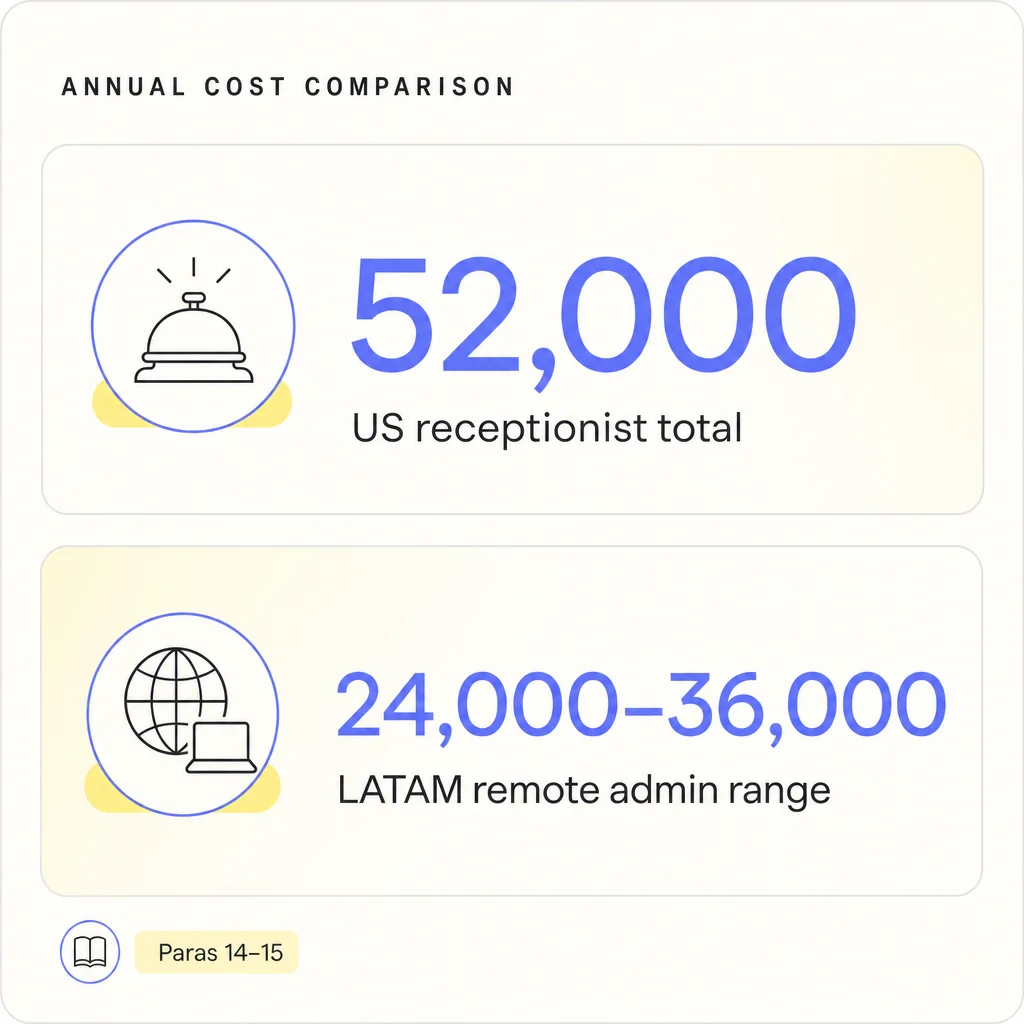
A full-time medical receptionist in the US costs about $40,000 yearly. Add another $12,000 for benefits and payroll taxes. That’s $52,000 total.
A highly skilled remote medical administrator from Colombia or Argentina? Around $24,000 to $36,000 annually for full-time work.
That’s $12 to $15 per hour. Not $8. Not $6.
The savings are real. But if you’re only seeing dollar signs, you’re missing the point.
What These Remote Workers Actually Do
Patient scheduling
Insurance verification
Medical billing
Triage phone calls
EHR data entry
Basically everything your in-house team does, except they’re doing it from Medellín or Buenos Aires instead of your back office.
A hospice provider used HireTalent.LAT and replaced three administrators with two remote workers from Colombia. The remote team handles hospice regulations, billing, and patient coordination.
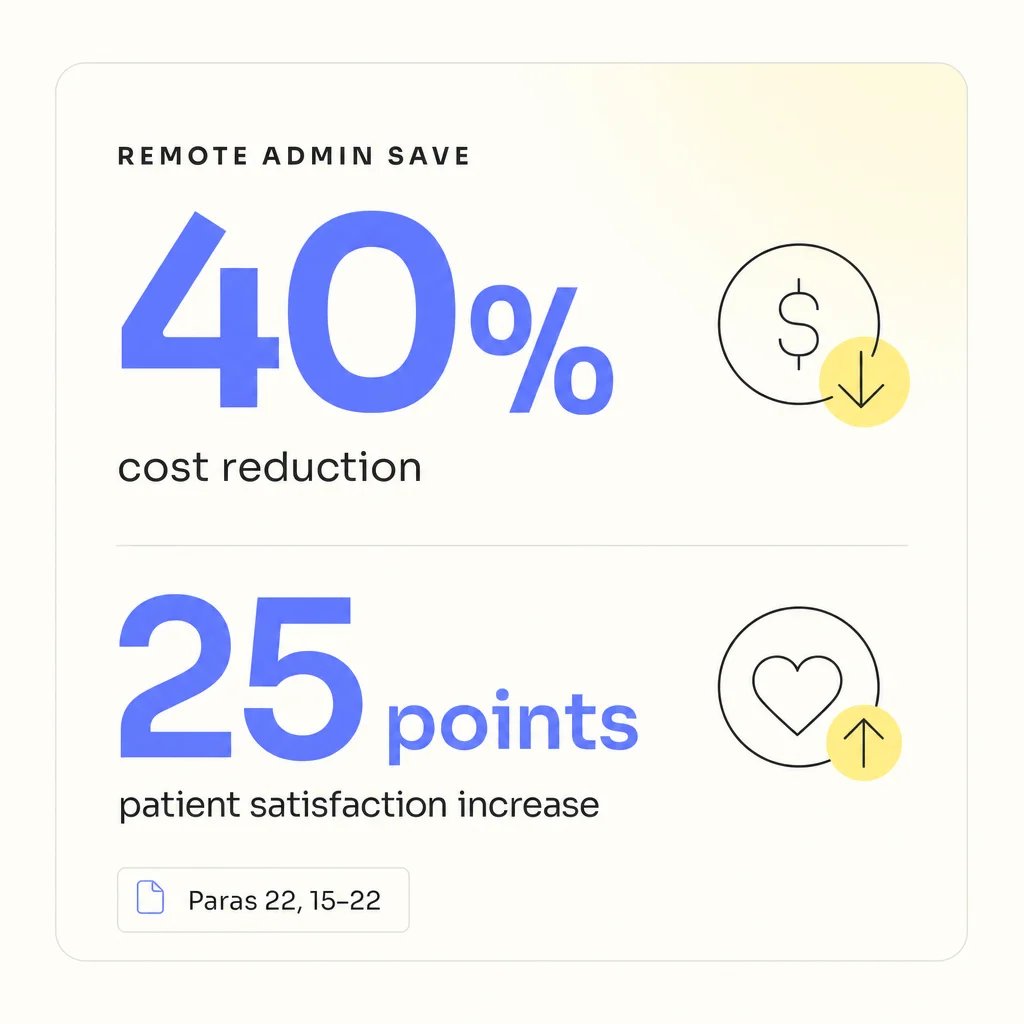
The result? 40% cost reduction. Patient satisfaction jumped 25 points.
Here’s what makes this work: these aren’t “virtual assistants” learning on the job. They’re trained medical administrators. Many have nursing backgrounds or health administration degrees.
They know Epic. They know Cerner. They understand CPT codes and pre-authorizations.
And increasingly, they’re bilingual which matters more than most practices realize.
The Compliance Question Everyone Asks First
“But what about HIPAA?”
Fair question.
Here’s the truth: reputable providers are extremely serious about HIPAA compliance. More serious than some in-house staff, honestly.
They sign Business Associate Agreements before anyone touches patient data. They use encrypted systems, VPNs, and multi-factor authentication. They train on PHI handling protocols.
The key word is “reputable.”
If you’re hiring a random freelancer off Upwork without vetting their compliance setup, yes, you’ll have problems.
How This Actually Works (The Practical Stuff)
You’re not just posting a job and hoping someone good applies.
The better approach: work with a platform who’s already pre-vetted people.
Here’s what the first month typically looks like:
Week One: You interview 2–3 candidates. Do a mock patient call. Example: “Someone calls saying they have chest pain—what do you do?” See how they handle it.
Week Two: Give them real tasks. Daily check-ins. See if they can navigate your EHR system.
Week Three: Training on your specific workflows. Most practices use Loom videos and live shadowing.
Week Four: They’re working independently. You’re still checking in daily, but they’re handling real patients.
Time zones help more than people expect. Colombia is in the same zone as US Eastern. Argentina is just one or two hours ahead. Mexico aligns perfectly with Central time.
A clinic in California hired someone in Mexico City specifically for evening coverage. “Our patients love booking appointments at 7 PM. Our local staff hated staying late. Now we have someone who’s happy to work those hours.”
The Part Where People Mess This Up
Not every hire works perfectly.
About 15% of practices report issues in the first few months. Usually it’s one of three things:
Communication barriers. Not language — most remote workers from South America speak excellent English. But accents can trip up patients occasionally.
Training shortcuts. Some practices rush onboarding: two days of training, then frustration when things go wrong.
Wrong expectations. If you’re hiring someone at $4/hour and expecting them to revolutionize your practice while you provide zero support, you’ll be disappointed. Pay professional rates. Provide professional training. Get professional results.
How To Start
Audit what your admin team actually does. Track it for one week. You’ll probably find 40% of their time goes to scheduling, phone calls, and data entry. Those tasks move remote easily.
Pick one platform to start with. Request three candidate profiles. Look for medical background, EHR experience, and solid English (or bilingual if that matters for your patients).
Do an interview. Don’t just chat. Give them scenarios. Show them your EHR system and ask them to navigate it.
Run a paid trial. One week, maybe two. Pay them fairly for their time. Give them real work. See what happens.
If it works, expand. If it doesn’t, you’re out maybe $300 and you learned something.
Most practices that try this don’t go back to all in-house staff. The model just works too well.
What You Should Actually Do Next
Look at your admin costs for last year.
Now imagine cutting that by 50% while improving coverage and reducing turnover.
That’s not hypothetical. That’s what practices are actually experiencing.
The question isn’t whether remote workers from South America can handle medical administration. They’re already doing it, for hundreds of practices, right now.
The question is whether you’re going to keep doing things the expensive, stressful way, or try something that might actually work better.
Start with one hire. See what happens.
You might be surprised.
Author

Ready to Find Your Next Great Hire?
Join our growing community of employers and start connecting with skilled candidates in Latin America.