
Here’s what’s happening right now in Nicaragua’s recruitment space.
The country has incredible talent, bilingual workers, great time zone alignment with the US, and lower costs than many other Latin American markets.
But the regulatory environment is still catching up.
That gap creates opportunities for agencies that shouldn’t exist — ones that promise placements they can’t deliver or charge fees for services they never provide.
The worst part? They’re getting better at looking legitimate.
Are You Looking to Hire in Latin America and Unsure Where to Start?
Sign up for an account and recruit your next employee within minutes!
What Actually Legitimate Agencies Do
Real agencies don’t operate in the shadows.
They partner with established firms. Companies like Cargill, Manpower Nicaragua, and Tecoloco. These partnerships aren’t just names on a website.
They provide transparent contracts—in Spanish, because that’s what Nicaraguan labor law requires for legal validity.
They help with documentation: work permits, temporary residence papers, and other bureaucratic requirements that often scare off fake operators.
They’re upfront about costs. No surprise fees. No vague “processing charges.”
Start With Registration and Partnerships
First thing: check if they’re actually registered.
MITRAB is Nicaragua’s labor authority. Legitimate agencies should be able to prove registration. If they dodge this question, that tells you something.
Look at who they work with. Real agencies collaborate with known entities such as GateSource HR, Rivermate, and G-P for international compliance. Cross-reference everything — a quick LinkedIn search can tell you if their “partnerships” actually exist.
A practical trick: check if they’re listed on vetted remote job platforms. Sites like Dynamite Jobs filter out unverified opportunities. If an agency’s placements show up there, that’s a positive sign.
Dig Into Their Reputation
This is where you become a detective.
Search online threads. Threads like r/digitalnomad, r/remotework, have real people sharing real experiences.
Legitimate agencies like Tecoloco get mentioned positively for interview prep, expat support, and actual help provided.
Fake agencies get called out for ghosting, posting jobs that don’t exist, or mimicking real companies like Cargill.
Use LinkedIn too, but look beyond the company page. Check employee profiles, read recommendations, and see if actual people work there.
If you can’t find any reviews at all, that’s a red flag the size of Lake Nicaragua.
Demand Documentation (And Actually Read It)
This is where most scams fall apart.
Ask for a detailed service contract. It should outline everything:
Job placement process
Payroll handling
Social Security contributions (19% employer contribution in Nicaragua)
INATEC training tax (2%)
Important: it needs to be in Spanish. Nicaraguan courts won’t recognize verbal agreements or English-only contracts for local employment matters.
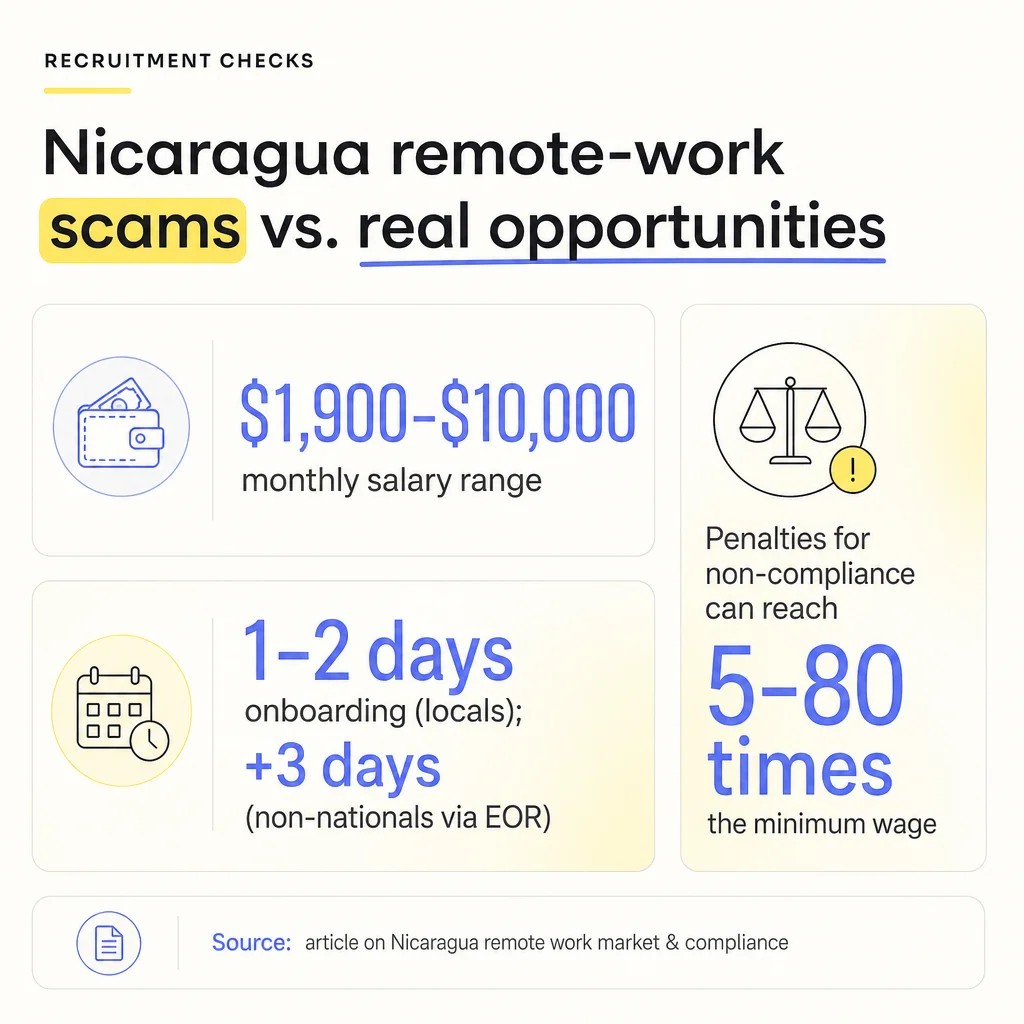
Real agencies will explain the onboarding timeline usually 1–2 days for Nicaraguan nationals, plus about 3 more days for non-nationals working through an Employer of Record (EOR).
They should be clear about work permits and the documents required: proof of employment, ID, criminal record check, medical certificate, and an employer letter explaining why no local hire was available.
If they’re vague about any of this, walk away.
Test Their Communication
Communication reveals a lot.
Legitimate agencies provide bilingual support (English and Spanish). That’s necessary for international placements.
They offer cultural coaching, give progress updates, and answer questions without making you feel stupid.
Try this: ask a specific question about the hiring process and judge the response time and clarity. Scams often lack native-language follow-up or give generic answers that could apply to any country.
Real agencies know Nicaragua. They understand the local market and can explain why certain processes take time.
Consider the EOR Alternative
Sometimes the smartest move is skipping the agency altogether.
Platforms like HireTalent.LAT let you hire Latin American workers directly.
You browse candidates who have been pre-screened for skills, work history, and identity, so you are not sorting through hundreds of unqualified applications hoping to find someone worth interviewing.
For companies hiring in markets like Nicaragua, where non-compliance penalties can run from 5 to 80 times the minimum wage, starting with a platform that handles documentation requirements from the beginning is not just convenient.
What the Numbers Tell You
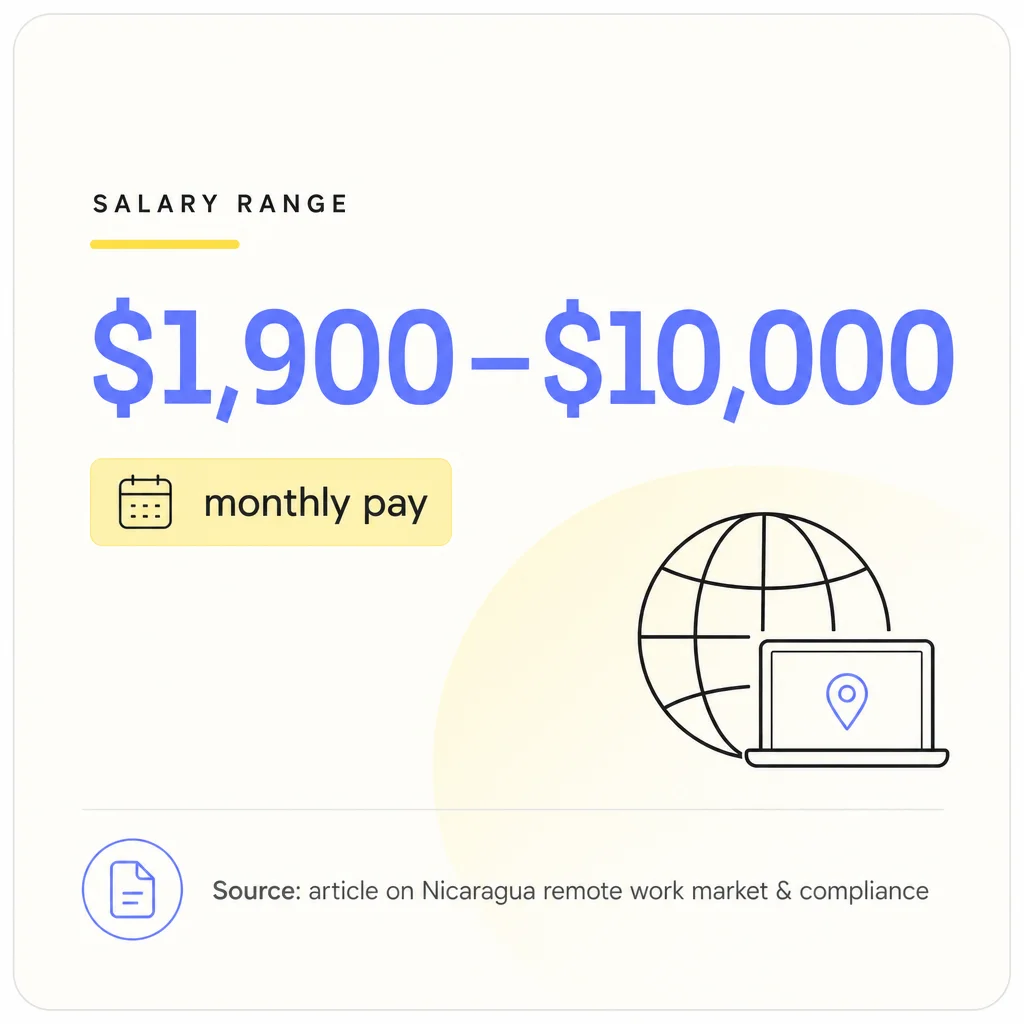
Average salaries for Nicaraguan remote workers typically range from $1,900 to $10,000 monthly.
If an agency promises placements well below that range, question it.
If they’re quoting way above without justification, question that too.
Legitimate opportunities exist across that spectrum, but the numbers should make sense for the role and experience level.
Red Flags You Can’t Ignore
Some things should end the conversation immediately:
Upfront fees without a clear service breakdown. Real agencies get paid when they deliver results, not before.
Verbal contracts only, or refusing to provide Spanish documentation.
No online presence. In 2024, every legitimate business has some digital footprint.
Pressure tactics like “this opportunity won’t last” or “we need your decision today.”
Requests for personal financial information early in the process. There’s no reason they need your bank details before you’ve agreed to work together.
What This Means for You
Whether you’re hiring or looking for work, the principle is the same: legitimate agencies are transparent, they document everything, and they have verifiable track records.
They don’t promise miracles. They don’t pressure you. They don’t operate in the shadows.
Nicaragua has incredible remote talent, and there are good agencies connecting that talent with international opportunities. But you need to know the difference between those agencies and the ones just taking up space.
Do the research. Ask the questions. Demand the documentation.
Your time is valuable. Your business is valuable. Don’t waste either on agencies that can’t prove they’re legitimate.
The right agency won’t mind being verified in fact, they’ll respect you more for doing your homework. That’s how you find the real ones.
Author

Ready to Find Your Next Great Hire?
Join our growing community of employers and start connecting with skilled candidates in Latin America.