
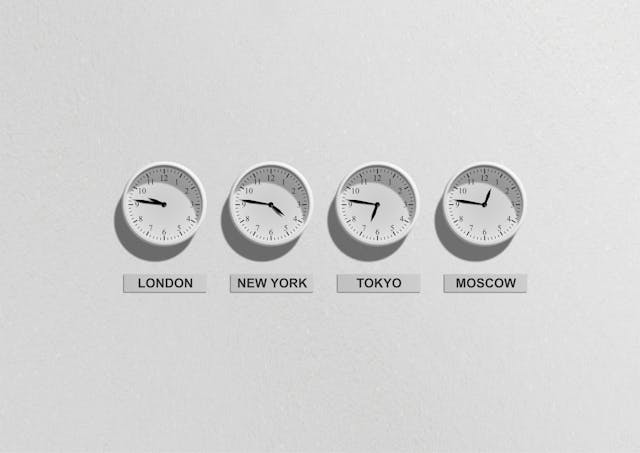
Latin America is not one time zone. It never was.
Brazil is 1 to 2 hours ahead of US Eastern. Colombia can be perfectly aligned with it. Mexico runs an hour behind. And the gaps shift through the year depending on who observes daylight saving time — and when.
If you’ve ever scheduled a standup that worked perfectly in January and felt mysteriously off by March, this is why.
These tables cover the five countries US employers hire from most. Bookmark the one that applies to you and stop doing the mental math every time a meeting goes on the calendar.
UTC Quick Reference
| Country | UTC Offset | DST? |
|---|---|---|
| Brazil (São Paulo) | UTC-3 | No (abolished 2019) |
| Mexico (most states) | UTC-6 standard / UTC-5 DST | Yes (Mar–Nov) |
| Colombia | UTC-5 | No |
| Argentina | UTC-3 | No (abolished 2009) |
| Peru | UTC-5 | No |
1. Brazil (São Paulo) ↔ US Eastern Time
Brazil (São Paulo) is UTC-3 year-round. No DST.
Offset vs US Eastern:
- EST (Nov–Mar): Brazil is 2 hours ahead
- EDT (Mar–Nov): Brazil is 1 hour ahead
Brazil to US Eastern — Standard Time (November to March)
EST = UTC-5 | Brazil = UTC-3 | Brazil is 2 hours ahead
| Brazil (BRT) | US Eastern (EST) |
|---|---|
| 12:00 AM | 10:00 PM (prev day) |
| 1:00 AM | 11:00 PM (prev day) |
| 2:00 AM | 12:00 AM |
| 3:00 AM | 1:00 AM |
| 4:00 AM | 2:00 AM |
| 5:00 AM | 3:00 AM |
| 6:00 AM | 4:00 AM |
| 7:00 AM | 5:00 AM |
| 8:00 AM | 6:00 AM |
| 9:00 AM | 7:00 AM |
| 10:00 AM | 8:00 AM |
| 11:00 AM | 9:00 AM |
| 12:00 PM | 10:00 AM |
| 1:00 PM | 11:00 AM |
| 2:00 PM | 12:00 PM |
| 3:00 PM | 1:00 PM |
| 4:00 PM | 2:00 PM |
| 5:00 PM | 3:00 PM |
| 6:00 PM | 4:00 PM |
| 7:00 PM | 5:00 PM |
| 8:00 PM | 6:00 PM |
| 9:00 PM | 7:00 PM |
| 10:00 PM | 8:00 PM |
| 11:00 PM | 9:00 PM |
Brazil to US Eastern — Daylight Saving Time (March to November)
EDT = UTC-4 | Brazil = UTC-3 | Brazil is 1 hour ahead
| Brazil (BRT) | US Eastern (EDT) |
|---|---|
| 12:00 AM | 11:00 PM (prev day) |
| 1:00 AM | 12:00 AM |
| 2:00 AM | 1:00 AM |
| 3:00 AM | 2:00 AM |
| 4:00 AM | 3:00 AM |
| 5:00 AM | 4:00 AM |
| 6:00 AM | 5:00 AM |
| 7:00 AM | 6:00 AM |
| 8:00 AM | 7:00 AM |
| 9:00 AM | 8:00 AM |
| 10:00 AM | 9:00 AM |
| 11:00 AM | 10:00 AM |
| 12:00 PM | 11:00 AM |
| 1:00 PM | 12:00 PM |
| 2:00 PM | 1:00 PM |
| 3:00 PM | 2:00 PM |
| 4:00 PM | 3:00 PM |
| 5:00 PM | 4:00 PM |
| 6:00 PM | 5:00 PM |
| 7:00 PM | 6:00 PM |
| 8:00 PM | 7:00 PM |
| 9:00 PM | 8:00 PM |
| 10:00 PM | 9:00 PM |
| 11:00 PM | 10:00 PM |
Note: When the US moves to EDT in March, Brazil goes from 2 hours ahead to just 1 hour ahead. No action needed on Brazil’s side — their clocks don’t move.
Working with Brazil: That 1-2 hour lead time is actually useful. Brazilian workers can get deep work done before your US team comes online, then sync up mid-morning for reviews and handoffs. Works well for content, dev, and operations roles where you want output waiting for you at the start of your day. Keep live meetings to the 9 AM–2 PM EST window and let async handle the rest.
2. Mexico ↔ US Eastern Time
Mexico (most states) observes DST. Both sides shift clocks, but not always on the same date.
Offset vs US Eastern:
- Both on standard time (Nov–Mar): Mexico CST (UTC-6) vs EST (UTC-5) — Mexico is 1 hour behind
- Both on DST (Mar–Nov): Mexico CDT (UTC-5) vs EDT (UTC-4) — Mexico is 1 hour behind
The offset stays at 1 hour almost all year. The exception is the brief transition windows in March and November when one country has switched and the other hasn’t yet.
Mexico to US Eastern (Standard offset: Mexico 1 hour behind)
| Mexico (CST/CDT) | US Eastern (EST/EDT) |
|---|---|
| 12:00 AM | 1:00 AM |
| 1:00 AM | 2:00 AM |
| 2:00 AM | 3:00 AM |
| 3:00 AM | 4:00 AM |
| 4:00 AM | 5:00 AM |
| 5:00 AM | 6:00 AM |
| 6:00 AM | 7:00 AM |
| 7:00 AM | 8:00 AM |
| 8:00 AM | 9:00 AM |
| 9:00 AM | 10:00 AM |
| 10:00 AM | 11:00 AM |
| 11:00 AM | 12:00 PM |
| 12:00 PM | 1:00 PM |
| 1:00 PM | 2:00 PM |
| 2:00 PM | 3:00 PM |
| 3:00 PM | 4:00 PM |
| 4:00 PM | 5:00 PM |
| 5:00 PM | 6:00 PM |
| 6:00 PM | 7:00 PM |
| 7:00 PM | 8:00 PM |
| 8:00 PM | 9:00 PM |
| 9:00 PM | 10:00 PM |
| 10:00 PM | 11:00 PM |
| 11:00 PM | 12:00 AM (next day) |
DST transition weeks: In March and November, the US and Mexico switch clocks on slightly different dates. During those 1–2 week windows, the offset temporarily becomes 0 hours (same time) or 2 hours behind. Double-check standing meetings during those weeks.
Border states note: Cities like Tijuana and Ciudad Juárez follow US DST dates rather than Mexico’s federal schedule. If your worker is in a border city, confirm which calendar they follow.
Working with Mexico: The near-identical time zone makes Mexico one of the easiest countries to run a fully synchronous team with. A standard 9-5 EST schedule works almost as-is. If you want async, build it — but honestly you don’t need to. Most US employers with Mexican remote workers just run a normal shared schedule with minimal adjustment.
3. Colombia ↔ US Eastern Time
Colombia is UTC-5 year-round. No DST. Ever.
Offset vs US Eastern:
- EST (Nov–Mar): Colombia and US Eastern are both UTC-5 — same time
- EDT (Mar–Nov): EDT is UTC-4, Colombia is UTC-5 — Colombia is 1 hour behind
Colombia to US Eastern — Standard Time (November to March)
EST = UTC-5 | Colombia = UTC-5 | Same time
Both clocks show the same time. No conversion needed.
Colombia to US Eastern — Daylight Saving Time (March to November)
EDT = UTC-4 | Colombia = UTC-5 | Colombia is 1 hour behind
| Colombia (COT) | US Eastern (EDT) |
|---|---|
| 12:00 AM | 1:00 AM |
| 1:00 AM | 2:00 AM |
| 2:00 AM | 3:00 AM |
| 3:00 AM | 4:00 AM |
| 4:00 AM | 5:00 AM |
| 5:00 AM | 6:00 AM |
| 6:00 AM | 7:00 AM |
| 7:00 AM | 8:00 AM |
| 8:00 AM | 9:00 AM |
| 9:00 AM | 10:00 AM |
| 10:00 AM | 11:00 AM |
| 11:00 AM | 12:00 PM |
| 12:00 PM | 1:00 PM |
| 1:00 PM | 2:00 PM |
| 2:00 PM | 3:00 PM |
| 3:00 PM | 4:00 PM |
| 4:00 PM | 5:00 PM |
| 5:00 PM | 6:00 PM |
| 6:00 PM | 7:00 PM |
| 7:00 PM | 8:00 PM |
| 8:00 PM | 9:00 PM |
| 9:00 PM | 10:00 PM |
| 10:00 PM | 11:00 PM |
| 11:00 PM | 12:00 AM (next day) |
Why Colombia is the easiest: Half the year you’re on the same clock. The other half you’re only 1 hour apart. No DST surprises on their end — ever.
Working with Colombia: As close to frictionless as remote hiring gets. From November to March you’re on the same time — no conversion, no early mornings, no late evenings. From March to November you’re just one hour apart. Set core hours, run a normal meeting cadence, and don’t overthink it. Colombia is the default recommendation for US employers who want real-time collaboration without the scheduling headache.
4. Argentina ↔ US Eastern Time
Argentina is UTC-3 year-round. No DST since 2009.
Offset vs US Eastern:
- EST (Nov–Mar): Argentina is 2 hours ahead
- EDT (Mar–Nov): Argentina is 1 hour ahead
(Same offsets as Brazil. Use the Brazil tables above — they apply identically to Argentina.)
Working with Argentina: Same math as Brazil, same practical approach. That 1-2 hour lead works well for async-first teams. Argentina has a deep pool of tech and creative talent, and Buenos Aires professionals are used to working with US clients. Set a daily check-in window around 10 AM–1 PM EST and let the rest of the day run async.
5. Peru ↔ US Eastern Time
Peru is UTC-5 year-round. No DST.
Offset vs US Eastern:
- EST (Nov–Mar): Peru and US Eastern are both UTC-5 — same time
- EDT (Mar–Nov): EDT is UTC-4, Peru is UTC-5 — Peru is 1 hour behind
(Same offsets as Colombia. Use the Colombia tables above — they apply identically to Peru.)
Working with Peru: Practically identical to Colombia in every scheduling sense. UTC-5, no DST, perfectly aligned with US Eastern in winter and just one hour behind in summer. Lima has a growing remote workforce across customer support, accounting, and operations. If you’re already comfortable with Colombia’s schedule, Peru requires zero adjustment.
Author

Ready to Find Your Next Great Hire?
Join our growing community of employers and start connecting with skilled candidates in Latin America.