
Marketing directors at US companies don’t have time.
They open your portfolio link while drinking their third coffee of the day. Maybe they’re between Zoom calls. Maybe they’ve already looked at fifteen other portfolios that morning.
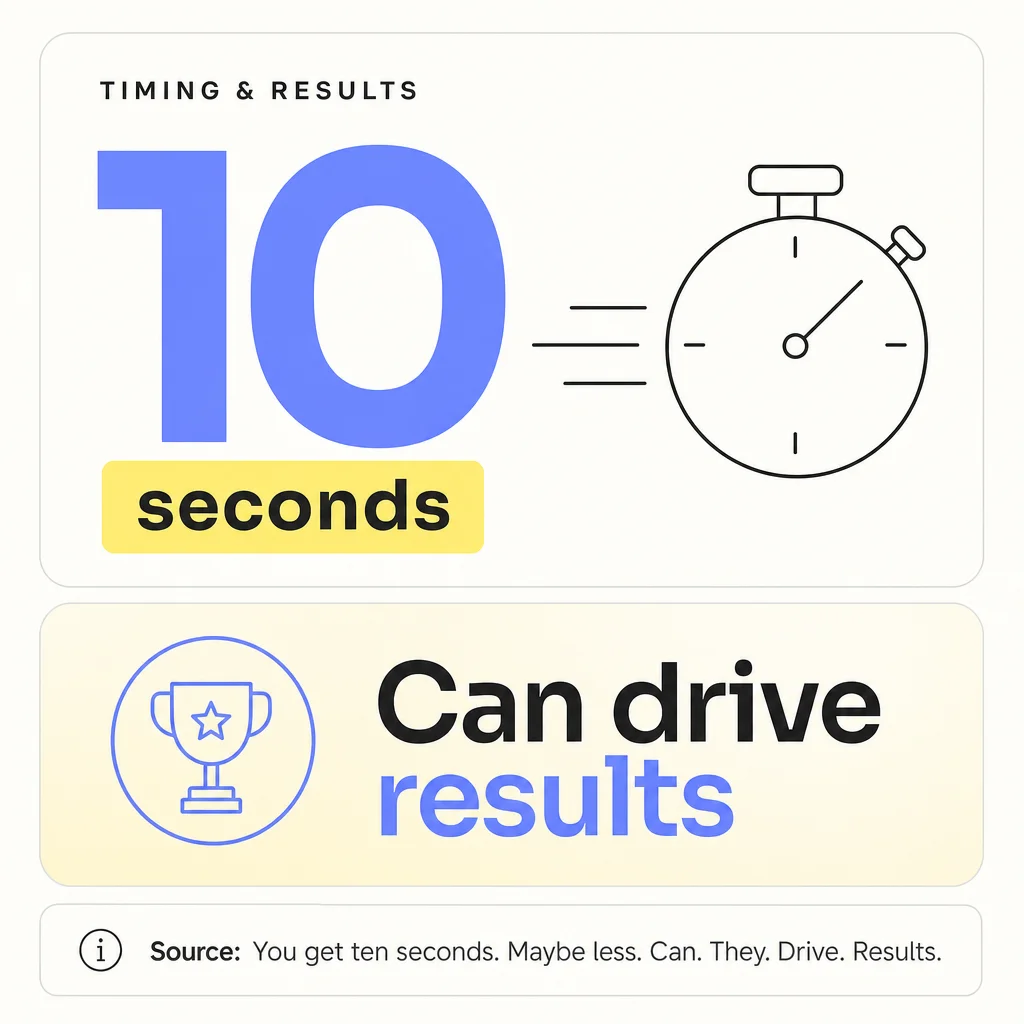
You get ten seconds. Maybe less.
In those ten seconds, they’re asking one question: “Can this person make me look good to my boss?”
Not “Do they write well?” Not “Are they creative?”
Can. They. Drive. Results.
If your portfolio looks like a Google Drive folder full of PDFs with no context, you’ve already lost. If it’s a beautifully designed website with flowery descriptions but no numbers, same thing.
Here’s what actually works.
Ready to Get Hired By Employers Actively Hiring Latin American Remote Workers?
Sign up for an account for Free and earn in US Dollars today!
What Should Be on Your Portfolio Homepage
Your homepage needs one sentence that immediately tells them what you do and who you do it for.
Something like: “SEO content for B2B SaaS companies that need to rank without sounding like robots wrote it.”
Or: “E-commerce product descriptions that convert browsers into buyers for US fashion brands.”
Notice what’s there: the type of content, the industry, the outcome.
Notice what’s not there: vague words like “passionate,” “creative,” “dedicated.”
I’ve seen this work for writers in Colombia who were getting ignored on Upwork. They changed their positioning statement and started getting responses within 48 hours.
Why? Because the hiring manager immediately knew if they were a fit or not.
Your Samples Need to Tell a Story (Not Just Show Writing)
Here’s where most Latin American writers get it wrong.
They think samples are about showing they can write. They paste a blog post and call it a day.
Wrong.
Samples need to show you understand strategy. That you know why you made specific choices. That you think like a marketer, not just a writer.
For each sample in your portfolio, you need three things:
The piece itself (obviously). But here’s the key: it should be a live link whenever possible. Not a PDF. Not a Word doc. A real, published article on a real website.
Why? Because hiring managers want to see it in its natural habitat. They want to see if it actually ranks. If people commented. If it looks professional in context.
The strategy behind it. This is what separates you from 90% of other applicants.
Write a short paragraph explaining:
What keyword you targeted and why
What search intent you were addressing (informational? transactional?)
What structural choices you made (comparison table? FAQ section?)
Any specific SEO tactics you used
The results it got. This is the money shot.
Even if you don’t have access to the client’s analytics, you can show something.
Screenshot the Google search results showing it ranks.
Use a tool like Ahrefs’ free keyword checker to show estimated traffic. If it’s your own blog, show actual Google Analytics numbers.
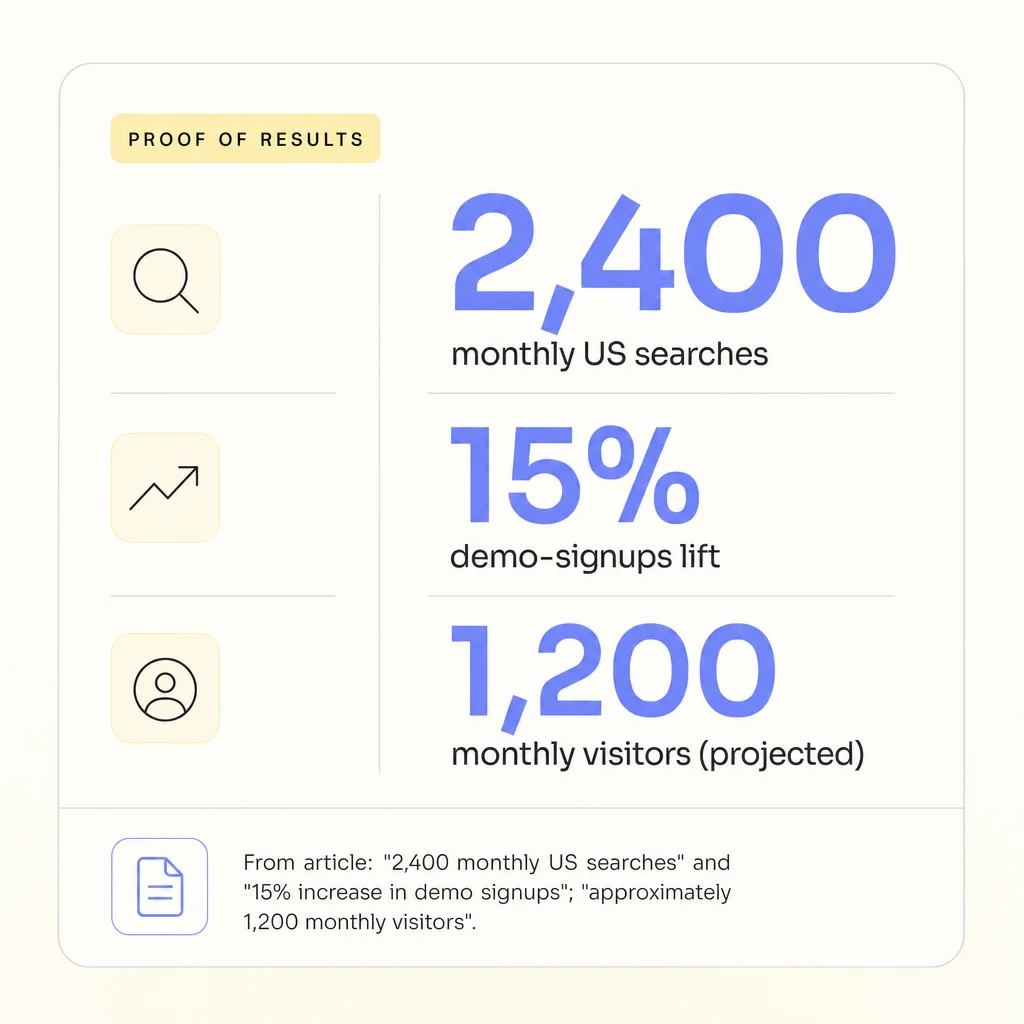
One writer from Argentina I know adds this to every sample: “Targeted ‘best project management software for remote teams’ (2,400 monthly US searches). Ranked #6 within two months. Client reported 15% increase in demo signups from organic traffic.”
That’s the difference between “I can write” and “I can drive business results.”
The Metrics Problem (And How to Solve It When You’re Starting Out)
“But I don’t have metrics yet.”
I hear this all the time from Latin American writers just starting out.
You’re ghostwriting. Or the client won’t share analytics. Or you’re building your portfolio from scratch.
Here’s what you do.
Option 1: Create your own blog. I know, I know. Everyone says this and it sounds like work.
But here’s the thing: you only need 3-5 solid articles. Pick topics you want to write about professionally. Target real keywords with real search volume in US markets. Optimize them properly.
Then install Google Analytics and Google Search Console. Both free. Takes an hour to set up.
In 2-3 months, you’ll have real data showing real rankings for real US search terms.
Option 2: Create spec pieces for real job postings.
Go to Upwork or Indeed. Find three job postings for content writers in your niche. Look at what they’re asking for.
Write the exact piece they need. As if they hired you.
Then annotate it with your strategy. “This was written for [Company Name]’s job posting requesting articles about cloud security. I targeted ‘cloud security best practices’ (5,400 monthly searches) because…”
You won’t have traffic metrics, but you’ll show strategic thinking.
Option 3: Use projection tools.
Tools like Ubersuggest or Ahrefs’ free tier can show you estimated traffic for keywords.
Screenshot these projections and include them: “Based on keyword analysis, this piece could drive approximately 1,200 monthly visitors if published and optimized.”
It’s not perfect. But it’s better than nothing.
Platform Choices That Actually Matter
Where should you host your portfolio?
Honestly? Anywhere that looks professional and loads fast.
I’ve seen successful LATAM writers use:
Carrd (super simple, free tier works fine)
WordPress.com (free, more features)
Notion (surprisingly effective, completely free)
Even a well-organized Google Site
What matters isn’t the platform. It’s the content and structure.
Your portfolio needs:
Clear navigation
Mobile-friendly design (50% of hiring managers will view it on their phone)
Fast loading (if it takes more than 3 seconds, they’re gone)
Your contact info visible on every page
That’s it. Don’t overthink the design.
The UGC Angle for Video-Savvy LATAM Creators
If you’re creating user-generated content (those authentic-looking TikToks and Reels for brands), your portfolio needs a different approach.
US brands are hunting for LATAM creators right now. Why? You’re affordable and you bring authentic cultural perspectives.
But your portfolio can’t just be a link to your Instagram.
Create a simple one-pager that shows:
Your niche (beauty? tech? lifestyle?)
Your audience demographics
3-5 top-performing videos with actual metrics (views, engagement rate)
Brands you’ve worked with (even if they’re small)
Your rate sheet
One creator in Medellín built a Notion page with embedded TikToks showing view counts. She went from $50 per video to $200 in two months because brands could immediately see her reach.
Mistakes That Kill Your Chances
Let me save you some pain.
Mistake #1: No context for your samples. Just dumping articles without explanation makes hiring managers work too hard. They’ll move to the next candidate.
Mistake #2: Outdated samples. If your most recent sample is from 2022, it signals you’re not actively writing. Update quarterly at minimum.
Mistake #3: Ignoring search intent. Writing a buying guide (transactional intent) like an educational piece (informational intent) shows you don’t understand SEO fundamentals.
Mistake #4: Generic positioning. “I write about everything!” sounds like “I’m not really good at anything.” Pick 2-3 niches maximum.
Mistake #5: Hiding your location. Some LATAM writers try to seem “more American” by hiding where they’re based. Don’t. Own it. “Mexico City-based writer serving US markets” sounds professional and confident.
Your One-Week Portfolio Launch Plan
You don’t need months to build this. You need focus.
Day 1-2: Pick your three best samples (or create them if you’re starting fresh). Write strategic annotations for each. Include keywords targeted, intent addressed, and any results or projections.
Day 3: Choose a platform (Carrd is fastest) and set up the basic structure. Add your positioning statement and bio.
Day 4: Upload samples with annotations. Add any metrics you have. Install Google Analytics on your site if you’re using your own domain.
Day 5: Share your portfolio on LinkedIn. Post in relevant Reddit communities (r/forhire, r/freelance_forhire) asking for feedback. Actually implement the good suggestions.
Ongoing: Every time you apply for a job, tweak your featured samples to match what they’re looking for. SaaS company? Show your SaaS samples first. E-commerce brand? Lead with product descriptions.
My Final Thoughts
Here’s what it comes down to.
Hiring managers don’t care where you live. They care about risk.
Will you deliver on time? Will the quality be there? Will you understand their US/UK/Australian audience even though you’ve never lived there?
Your portfolio’s only job is to remove that risk from their mind.
Show them you understand SEO strategy. Show them you can drive measurable results. Show them you’re professional, reliable, and easy to work with.
Do that, and being based in Latin America stops being a disadvantage. It becomes an advantage because you’re offering the same quality at better rates with flexible hours.
Your portfolio isn’t a scrapbook of your writing journey. It’s a sales tool designed to get you hired.
Build it like one.
Author

Ready to Find Your Next Great Hire?
Join our growing community of employers and start connecting with skilled candidates in Latin America.